
Cooking with kids isn’t just about whipping up a snack; it’s a delightful adventure that can turn a mundane kitchen into a bustling culinary playground. Imagine the joy on their faces as they mix, stir, and sprinkle their way to delicious creations. Not only does it keep them entertained, but it also teaches valuable life skills—like how to avoid eating raw cookie dough (just kidding, that’s half the fun).
Benefits of Cooking Activities for Kids
Cooking activities for kids offer numerous advantages that extend beyond mere enjoyment. Skills gained in the kitchen enhance various aspects of a child’s development.
Enhancing Motor Skills
Engaging in cooking requires precision and movement, helping children improve both fine and gross motor skills. Tasks like chopping fruits, stirring mixtures, and kneading dough strengthen hand-eye coordination. Activities involving pouring and measuring ingredients also enhance dexterity. Consistent practice provides an opportunity to build confidence and independence. Mastering these skills can lead to greater proficiency in other areas such as writing and playing sports.
Fostering Creativity
Cooking encourages children to express their creativity in unique ways. Experimenting with flavors, textures, and presentation allows kids to think imaginatively. Recipe variations inspire them to invent new dishes, sparking innovation. Kids can also explore different cultures through food, broadening their understanding of the world. Creating meals becomes more than just a task; it turns into an art form that engages their problem-solving abilities and promotes self-expression.
Safe Cooking Practices
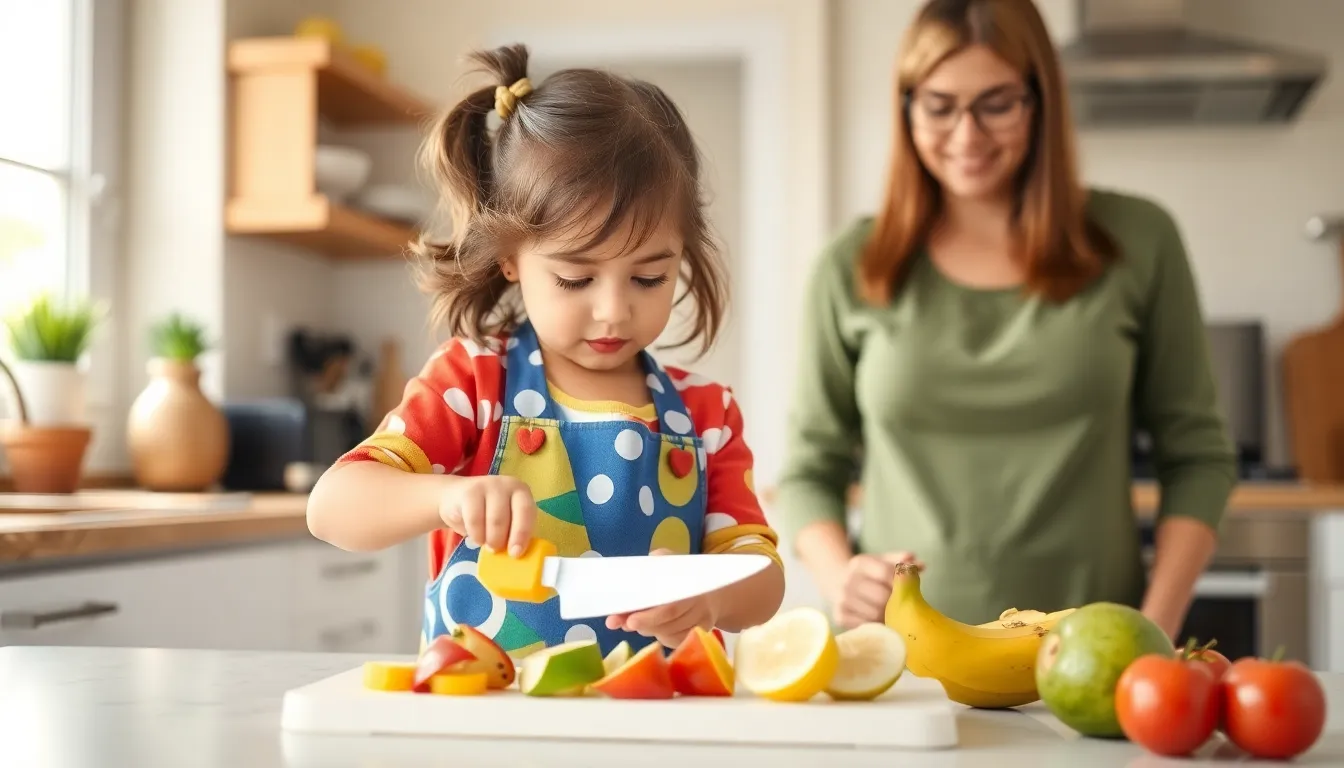
Cooking with kids involves certain safety practices to ensure a secure and enjoyable experience. Following these practices minimizes risks and enables children to focus on the fun of cooking.
Kitchen Safety Tips
Always supervise children while cooking. Make sure they understand the importance of washing hands before and after handling food. Teach them to respect hot surfaces and sharp objects. Encourage them to use oven mitts when handling hot pans. Establish a clear area for slicing and chopping to prevent accidents. Discuss the need for caution when working with appliances like mixers and blenders. Remind them to be aware of their surroundings to avoid spills or falls.
Age-Appropriate Tools
Select tools based on children’s ages. For younger kids, use plastic knives for cutting soft fruits or vegetables, ensuring safety. Provide measuring cups and spoons that are easy to grip. Opt for sturdy mixing bowls that won’t tip over easily. Allow older children to use sharper knives under supervision, teaching them proper techniques. Introduce small appliances like blenders with safety features, suitable for older kids. Always encourage regular checking of tools for wear and tear, guaranteeing they remain safe to use.
Fun Cooking Activities for Kids
Cooking engages kids in a vibrant way, allowing them to explore their culinary skills. Several activities encourage participation and learning.
Simple Recipes to Start With
Pancakes serve as an excellent introduction to cooking. Kids can mix flour, eggs, and milk, enjoying the process of creating batter. Fruit kabobs offer another easy recipe, where children arrange pieces of various fruits on skewers, promoting creativity. Decorating cookies also provides a fun activity; kids can use frosting and sprinkles for personal touches. Each recipe helps develop essential skills like measuring ingredients and following instructions, giving children confidence in their cooking abilities.
Themed Cooking Days
Cultural exploration through themed cooking days excites kids in the kitchen. Italian day can feature homemade pizza, letting children choose toppings and create their own flavor combinations. Taco night allows for assembly; kids can fill tortillas with beans, cheese, and various toppings, fostering teamwork. A dessert-themed day could involve making ice cream sundaes, offering a delightful treat kids can customize. Organizing these special days enhances interest and introduces culinary diversity, enriching children’s understanding of global cuisines.
Engaging Kids in Meal Preparation
Engaging kids in meal preparation fosters excitement and builds essential skills. Cooking together also creates memorable family moments.
Planning a Family Cooking Night
Creating a family cooking night encourages teamwork and bonding. Choose a day that suits everyone, ensuring availability. Select recipes that appeal to all ages, like homemade pizzas or colorful fruit kabobs. Assign tasks based on skill levels, allowing younger children to do simpler jobs, like mixing ingredients. Plan the evening after school or on weekends when energy levels are high. Making cooking feel like a special event enhances participation, so set the table and play fun music while cooking together.
Incorporating Learning with Cooking
Incorporating learning while cooking develops valuable concepts. Measurements teach fractions, while ingredient names provide vocabulary. Use recipes that require reading and comprehension skills, making learning enjoyable. Discuss nutrition and ingredients, helping children understand healthy choices. Encourage creativity by allowing them to improvise with flavors and presentation. These tasks promote critical thinking as kids decide what works best. Overall, cooking becomes a hands-on learning experience, blending education with fun in the kitchen.
Cooking with kids not only creates lasting memories but also nurtures essential life skills. As children engage in the kitchen they develop confidence and independence while exploring their creativity. The hands-on experience of measuring ingredients and following recipes enhances their motor skills and cognitive abilities.
Involving children in meal preparation fosters teamwork and strengthens family bonds. It opens doors to cultural exploration and introduces them to diverse cuisines. By prioritizing safety and age-appropriate tasks parents can ensure a fun and secure cooking environment.
Ultimately cooking together transforms the kitchen into a space of learning and joy where children can thrive and express themselves freely. Embracing these cooking activities paves the way for a lifetime of culinary adventures and healthy habits.

