
In a world where learning often feels like a chore, the concept of “learning through play” bursts onto the scene like a superhero in a cape. Imagine a classroom where kids aren’t just sitting at desks but are diving into adventures, building castles, and solving mysteries—all while soaking up knowledge like sponges. This isn’t just a whimsical fantasy; it’s a proven method that transforms education into an engaging experience.
Understanding Learning Through Play
Learning through play fosters a dynamic educational environment. This method enhances children’s engagement and promotes deeper understanding of concepts.
Definition and Importance
Learning through play refers to an approach in which children explore, create, and discover through play activities. It emphasizes the significance of hands-on experiences in acquiring knowledge. Research shows that this method nurtures critical thinking and problem-solving skills. Furthermore, it encourages social interaction and emotional development. By blending fun and education, children become more motivated learners. The engaging atmosphere allows for improved retention of information. Effective learning occurs when children feel relaxed and interested.
Key Theories Behind Play-Based Learning
Several key theories support play-based learning, with prominent thinkers contributing invaluable insights. Piaget’s theory of cognitive development highlights that children learn through active exploration. Vygotsky’s sociocultural theory emphasizes the role of social interaction in learning. He suggested that collaboration enhances cognitive growth. Bruner’s constructivist theory posits that learners create their understanding through experiences. The interplay of these theories showcases the educational value of play. Implementing these ideas in classrooms cultivates a supportive environment for children. A focus on experiential learning allows for a comprehensive educational framework.
Benefits of Learning Through Play
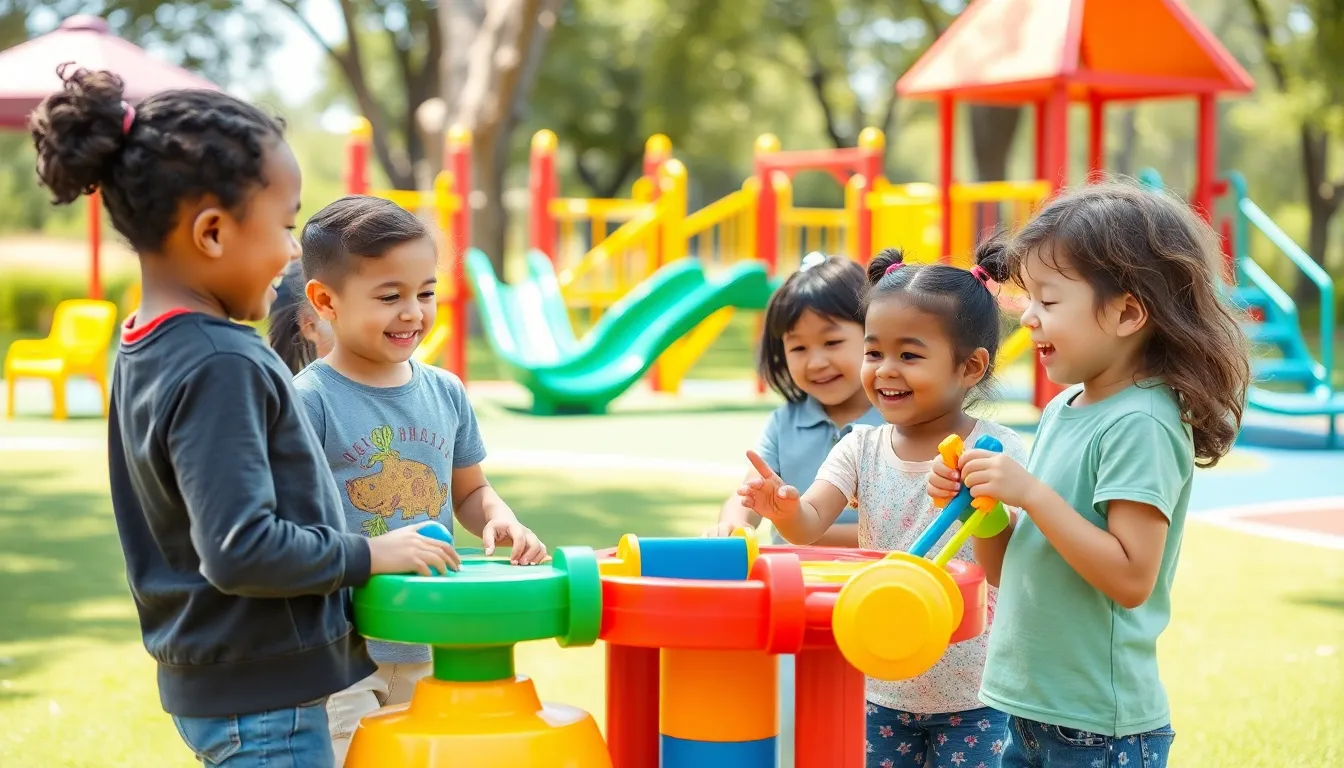
Learning through play offers numerous advantages, enhancing various aspects of child development. By engaging in play, children gain critical skills that support their growth and learning.
Cognitive Development
Cognitive development thrives in a playful environment. Children develop problem-solving skills through activities that challenge their thinking. Engaging in games and explorative tasks enhances creativity, allowing for unique ideas and solutions. According to Piaget, hands-on experiences support knowledge acquisition and understanding of concepts. Playful learning encourages curiosity, leading to a lifelong love for exploration and discovery.
Social Skills Enhancement
Social skills improve significantly in play-based settings. Children interact with peers, learning the importance of teamwork and communication. They practice sharing, negotiating, and resolving conflicts during group activities. Vygotsky’s theory emphasizes social interaction as a key component of learning, highlighting the role of collaborative play. As they engage with others, children develop empathy, building relationships that foster emotional intelligence.
Emotional Growth
Emotional growth accelerates through play experiences. Play allows children to express their feelings and understand complex emotions in a safe space. Engaging in role-playing activities promotes self-regulation and resilience when facing challenges. Bruner’s constructivist theory suggests that emotional experiences during play significantly impact learning, nurturing self-confidence and independence. Children learn to manage their feelings, leading to improved emotional well-being.
Implementing Learning Through Play in Education
Integrating learning through play into education transforms classroom dynamics. It offers an engaging platform for children to explore concepts actively.
Curriculum Integration
Integrating play in the curriculum enhances children’s learning experiences. Teachers can align play activities with subjects such as math, science, and language arts. For example, using building blocks facilitates understanding geometry and spatial awareness. Creative art projects can reinforce language skills through storytelling. Moreover, outdoor play can introduce scientific concepts like ecosystems. This connection between play and curriculum fosters deeper comprehension. Classrooms that prioritize play-based learning often show higher levels of student motivation and engagement.
Strategies for Educators
Educators can employ several strategies to promote learning through play effectively. Designing a flexible schedule allows time for unstructured play alongside structured lessons. Encouraging collaboration among children fosters social skills and teamwork. Providing a variety of materials enables creative expression during play activities. Regularly observing and assessing children’s engagement helps educators tailor experiences based on individual needs. Incorporating thematic play areas can spark interest in specific subjects, making learning more enjoyable. By implementing these strategies, educators create an environment where playful learning thrives.
Challenges and Considerations
Implementing learning through play involves navigating various challenges that educators face. Identifying a balance between play and structure plays a crucial role.
Balancing Play and Structure
Finding the right mix of structured learning and free play proves essential. Clearly defined learning objectives need to coexist with spontaneous play opportunities. Educators benefit from observing children’s interests and integrating them into lesson plans. Previously, some found it difficult to allocate time effectively, yet flexible scheduling allows for both structured and unstructured activities. Incorporating play-based learning requires ongoing adjustment to ensure children’s needs are met while promoting educational outcomes.
Addressing Diverse Learning Needs
Recognizing individual learning needs makes a significant difference in educational settings. Every child learns at their own pace and often in unique ways. Effective educators implement varied strategies to accommodate different learning styles. Play activities should include sensory experiences, which help engage children with diverse abilities. Group activities may also encourage collaboration among peers, fostering inclusivity. Tailoring experiences to meet individual requirements enhances the overall effectiveness of learning through play.
Embracing learning through play redefines educational experiences for children. This approach not only makes learning enjoyable but also cultivates essential skills that shape their future. By fostering creativity critical thinking and emotional resilience children thrive in environments that prioritize play as a vital learning tool.
Educators play a crucial role in implementing this method effectively. By integrating play into various subjects and allowing for flexibility in lesson plans they can create dynamic classrooms that engage students on multiple levels. The benefits of this approach extend beyond academic achievement promoting social interaction and emotional growth that are equally important.
Ultimately the shift towards learning through play represents a holistic approach to education. It encourages children to explore their interests and develop a love for learning that lasts a lifetime.

